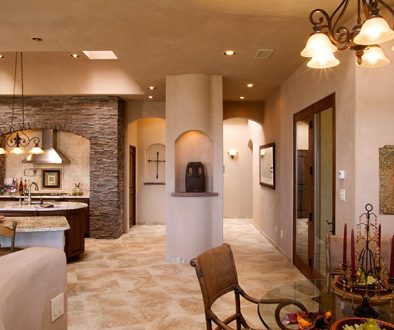


A Home for All Ages
The best accessible features are really just good design
For lots of reasons these days, more households include parents and grown children. As of 2026, the share of home purchases made for multigenerational households has reached 17%—a significant jump from the 11% we saw in 2021. About 60 million Americans (roughly 1 in 5) now share a home with two or more adult generations.
As home prices continue climbing, the best financial decision for many families is to gather under one roof.
This poses a design challenge: How do you create spaces that are friendly to older people with physical limitations without looking like an assisted living facility? It may be easier than you think—if planned well, an accessible home can feel great to everyone. And when the time comes to sell, the home will have an edge in the market.
Here are some features to think about when planning your new home.
Getting in and out. Everyone loves easy entries. The ideal would be no steps to and from the garage, the front of the house and the outdoor living space. If this isn’t practical, then at least create flat or sloping access to the deck or patio. That way, someone with difficulty climbing stairs won’t feel trapped inside.
These are actually great ideas for all homes, when you consider that people over 40 are at higher risk of orthopedic problems like broken hips and bad knees. (The average age for knee replacements is 50.)
Don’t forget hardware. Although lever door handles obviously help people with arthritic hands, they will be appreciated by anyone entering the house with an armful of groceries.
Safer sleep. A first-floor bedroom with an en suite bath is a valuable long-term asset. Leave sufficient space around the bed for caregivers and for someone with physical limitations to easily get in and out.
Making the shower floor flush to the bathroom floor eliminates a tripping hazard and provides a clean, contemporary look. If you don’t need grab bars yet, the builder can add blocking behind the drywall to support them when needed.
The bedroom can also serve as an office, den or guest suite. Some homeowners design the bath with doors leading to the bedroom and to a common area, so visitors can use it.
Moving around. Building codes set the minimum residential hallway width at three feet, but four is better. Wide hallways make room for wheelchairs and walkers and also feel luxurious. The downside of a wide hallway is that it takes space from adjacent rooms.
If you prefer standard-width hallways, at least consider wide interior doors. A three-foot width is just a few inches wider than a standard interior door, but it’s more accessible and simplifies the moving of furniture.
Looking great. Aging eyes will appreciate more light and better contrast between surfaces, and these elements make for more appealing spaces, too. Consider adding low pathway lights to illuminate stair treads and certain floor surfaces. Besides reducing the chance of falls, they help everyone get around after dark without turning on the main lights.
Other possibilities. There are plenty of additional touches to make a home work better for all who live there. For instance, an induction cooktop stays cool to the touch even when turned on, which means that old and young alike are less likely to get burned. Hard surface floors are easier than carpet for a wheelchair to navigate, and they lessen the chance of dust and mites.
The point is to bring accessibility into the discussion, even if you don’t include all these elements in the final design. That open-minded approach is a hallmark of good planning.